Industrial Pad Flanges Built for Demanding Applications
Carbon Steel · Stainless Steel · Alloy Steel
Manufactured and supplied per ASME / ANSI / AWWA / API standards.
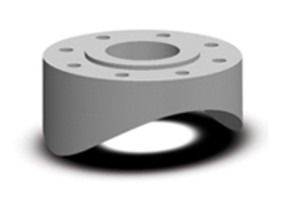
Exploring Pad Flanges
Pad flanges, also known as studding outlet flanges, minimize projection of equipment both inside and outside a vessel - providing compact, reliable connection points for industrial instruments and devices.
A pad flange is a specialized component used in industrial equipment, pipelines, and vessels to seal openings and maintain system integrity. What sets pad flanges apart is their compact design, which minimizes projection both inside and outside the equipment, making them space-efficient.
They facilitate the direct mounting of instruments and devices onto vessels or pipelines, eliminating the need for additional nozzles or penetrations - critical in applications where space is at a premium.
View All Types →Flat Face Pad Flange
Flat, smooth sealing surface for low-pressure, non-corrosive, non-toxic environments where a raised face or gasket is not required.
Raised Face Pad Flange
Raised surface accommodates a gasket compressed between flange and mating component - ensuring a tight, leak-free seal for higher-pressure applications.
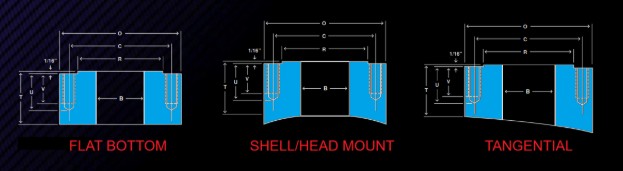
Materials Used to Make Pad Flanges
Pad flanges are typically manufactured in three primary material families - each suited to specific service conditions.
Stainless Steel
Good corrosion resistance and abrasion resistance. Strong and durable. Best suited for high-pressure applications and corrosive service environments.
Carbon Steel
Less expensive than stainless steel. Not as resistant to corrosion or abrasion. Well suited for low-pressure, general-purpose applications.
Alloy Steel
Combination of carbon steel and other alloying elements. Stronger and more corrosion-resistant than carbon steel. Ideal for medium- to high-pressure applications.
Key Characteristics
What makes pad flanges the preferred choice across demanding industrial environments.
Minimal Projection
Designed to minimize projection inside and outside the vessel - critical for certain instrumentation mounting applications.
Easy Installation
Typically welded directly to the vessel, providing a strong, reliable connection that simplifies both installation and ongoing maintenance.
Wide Size & Pressure Range
Available in a wide range of sizes and pressure ratings - suitable for chemical processing, pharmaceutical, power generation, and oil & gas.
Equipment Versatility
Compatible with sight glasses, level gauges, flow indicators, temperature sensors, pressure sensors, and relief valves.
Pad Flange Applications
Pad flanges are used across a wide range of industrial applications where compact, secure connections are essential.
Mounting Sight Glasses
Pad flanges commonly mount sight glasses to vessels and tanks, allowing operators to visually inspect contents without opening the vessel.
Mounting Level Gauges
Used to mount level gauges for measuring liquid or gas levels in vessels and tanks with minimal intrusion into the vessel wall.
Mounting Flow Indicators
Mount flow indicators on pipes and pipelines to visually indicate fluid or gas flow rate without requiring large nozzle penetrations.
Sensors & Relief Valves
Mount temperature sensors, pressure sensors, and relief valves to vessels and tanks - particularly well-suited where space is limited.
Design & Standards
Pad flanges are designed in accordance with various industry standards that specify dimensions, materials, and construction requirements.
| Standard | Scope |
|---|---|
| ASME B16.5 | Design and manufacture of pipe flanges and flanged fittings |
| ANSI/AWWA C207 | Steel pipe flanges and flanged fittings for water and wastewater service |
| BS EN 1092-1 | European standard for flanged joints for pipes, valves, and fittings |
| DIN 2501 | German standard for flanged joints for pipes, valves, and fittings |
| JIS B2220 | Japanese standard for steel pipe flanges and flanged fittings |
Frequently Asked Questions
Q1. Are there different types of pad flanges, and how do I choose the right one?
Yes. Types include flat face, raised face, ring type joint (RTJ), weld neck, slip-on, threaded, and socket weld pad flanges. The choice depends on pressure, temperature, compatibility, and application requirements.
Q2. What materials are pad flanges typically made of?
Pad flanges can be made from a range of materials, including carbon steel, stainless steel, and other corrosion-resistant alloys depending on service conditions.
Q3. What is the significance of maintenance for pad flanges?
Regular maintenance is essential for long-term reliability. It includes inspections, gasket replacement (if applicable), corrosion prevention, bolt tightening, leak detection, and comprehensive record-keeping.
Q4. Can pad flanges be used in high-pressure and high-temperature applications?
Yes. Raised face and RTJ designs are specifically engineered for high-pressure and high-temperature service.
Q5. Are pad flanges adaptable to different connection types?
Yes. Pad flanges come in weld neck, slip-on, threaded, and socket weld connection types, making them adaptable to different installation and system requirements.
Q6. Can I replace a pad flange gasket without professional assistance?
Gasket replacement requires careful consideration of material compatibility and proper installation. Professional guidance is recommended to ensure an effective seal and system integrity.
Ready to Source Your Pad Flanges?
Texas Flange provides the right flange solutions tailored to your application's demands.